
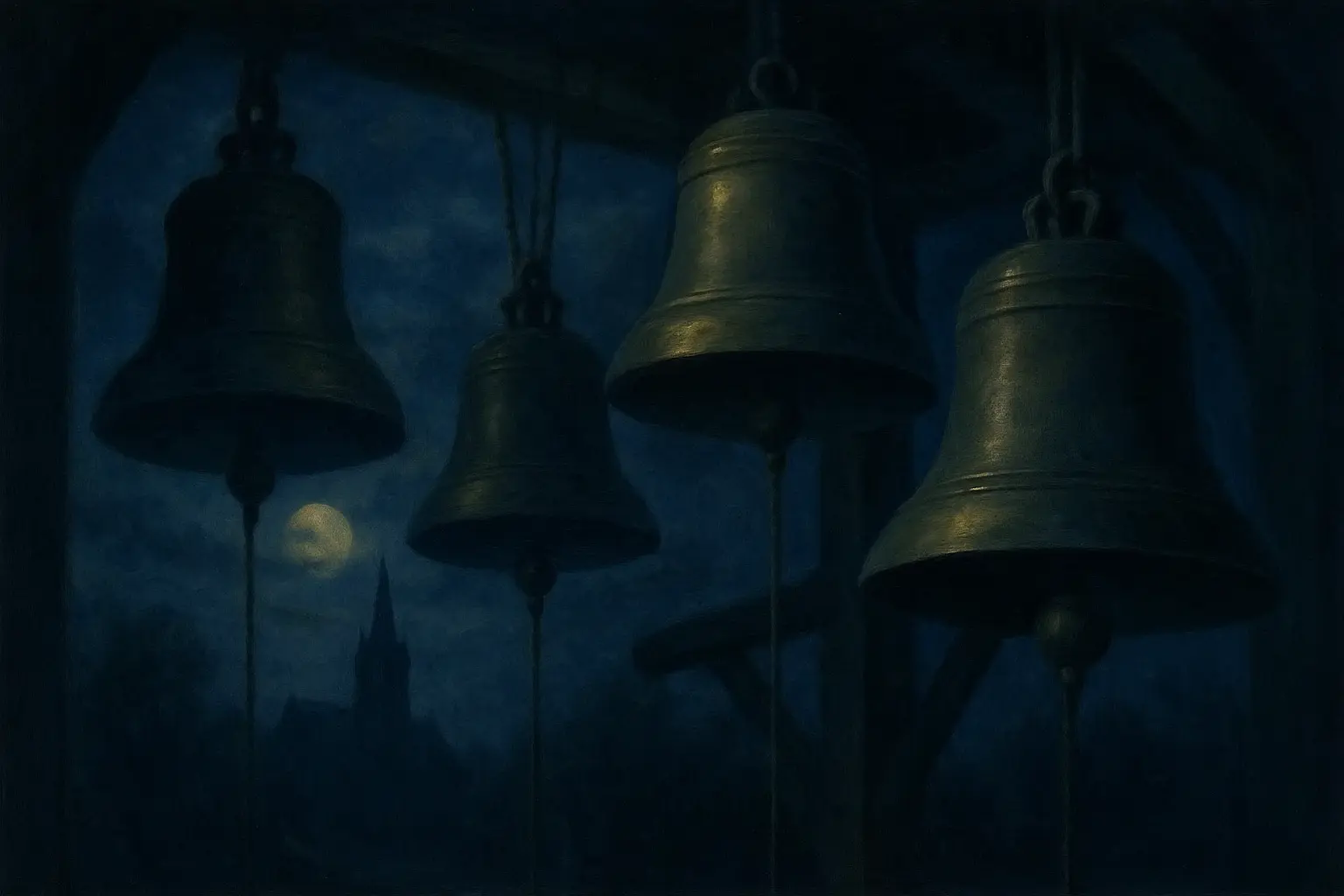
“The Bells” is probably Poe’s most musical poem, and look, you really need to hear this one out loud. Reading it silently doesn’t cut it. Published in 1849 after Poe died, this four-part poem tracks different bells through the stages of human life. It kicks off with cheerful sleigh bells and wraps up with those heavy funeral bells that nobody wants to hear. The whole thing’s basically Poe showing off what he can do with sound—rhythm, repetition, words that mimic the actual ringing.
Here’s what makes it cool: the bells aren’t just bells. They’re youth, love, danger, death. Each section has its own vibe and rhythm that actually sounds like the bells Poe’s describing. It’s less storytelling and more about creating this full sensory experience just with words. If you’re stuck analyzing this for English class or you just dig poetry, “The Bells” is Poe doing something totally different from his usual dark horror stuff. He’s just playing with language like it’s a musical instrument.
Table of Contents:
Full Poem Text
Due to the length of this poem, we’ve placed the full text on a separate page of our site. This keeps the article readable while still giving you access to the complete work.
You can view the full poem here: The Bells by Edgar Allan Poe
Summary and Meaning
The poem breaks into four chunks, each one focused on different bells and what they mean.
Part One: Silver Bells opens with sleigh bells in winter. Total joy, super light atmosphere. These bells scream youth, happiness, innocence. The rhythm bounces along like you’re flying down a snowy hill. Everything feels magical and carefree, the way being a kid should feel before life gets complicated.
Part Two: Golden Wedding Bells shifts gears to something warmer and more romantic. Wedding bells, obviously. Love, harmony, all that good stuff. The pace slows down, gets more melodious. There’s still happiness here, but it’s grown-up happiness, you know? The golden color isn’t random—it suggests something precious, like finding the right person.
Part Three: Brazen Alarm Bells is where Poe yanks the rug out. These are emergency bells, fire alarms, danger warnings. The whole vibe goes dark fast. The rhythm gets frantic and chaotic. Poe throws in harsh, clashing sounds to make you feel panicked. This section’s about when life goes sideways—disasters, terrors, all the stuff that can hit you out of nowhere.
Part Four: Iron Funeral Bells closes everything out with death. These bells are heavy, sad, done. The rhythm slows way down, deliberate like a funeral march. No escape from these bells. They’re not warning you something bad might happen; they’re telling you it’s over. The tone’s resigned, almost hypnotic with all the repetition, like death’s just inevitable and you might as well accept it.
So what’s it really about? Life in four acts, basically. Childhood innocence (silver bells), falling in love (golden bells), dealing with life’s disasters (alarm bells), dying (funeral bells). It’s not exactly subtle. But Poe’s genius is making you actually feel each stage through pure sound. The meaning hits you through your ears before your brain catches up.
Themes and Analysis
The Progression of Life
Four bell types, four life stages. Birth to death in one poem. What gets me is the emotional rollercoaster. It’s not all grim. Those first two sections have real joy in them. But Poe’s also being straight with us—life’s got celebrations AND suffering. The progression feels unavoidable. Once you’ve heard sleigh bells, funeral bells are coming eventually. That’s just time doing its thing. The poem nails both the variety of being alive and the fact that everyone’s headed the same direction ultimately.
Sound as Meaning
This poem is onomatopoeia on steroids. Poe’s not describing bells; he’s making the words become bells. Light, tinkly sounds up top. Rich, harmonious stuff in section two. Harsh, clanging noise in three. Heavy, boom-boom-boom in four. Seriously, read this thing out loud. You’ll hear the difference between each bell type immediately. The way it’s written and what it’s saying are the same thing. Sound equals meaning here.
Joy and Terror
Poe goes hard on both ends of the emotional spectrum. First two sections? Genuinely happy, which is weird for Poe if we’re being honest. He’s not being dark or cynical there. He lets himself celebrate being young and in love. Then bam, section three hits you with straight terror. The whiplash makes both feelings stronger. That panic hits harder because you just felt safe and happy. Life’s like that—joy and disaster sitting right next to each other.
Inevitability of Death
Those funeral bells at the end surprise exactly nobody. The whole poem’s been heading there from line one. Even when things are happy, you can feel time ticking. The bells move in one direction only. Can’t reverse from funeral bells back to sleigh bells. Once you hit that final stage, game over. Poe’s not being depressing for fun here; he’s just being real. Everyone’s story ends with those heavy, final bells eventually.
The Power of Repetition
“Bells” appears like sixty times in this poem. Sixty! That could get old fast, but somehow it doesn’t. It gets hypnotic instead, like actual bells ringing in your skull while you read. The repetition also hammers home how bells mark all the big moments in life. Birth, marriage, death—bells announce them all. They’re always there in the background, counting down. Repeating the word makes them feel inescapable, which is kind of the point.
Structure and Form
Poe set this up as four sections that get longer as you go. Part one’s short and bouncy. Part four’s long and drags. Even the physical look on the page matches what’s happening. Youth’s brief and flies by; death takes forever to arrive but then won’t leave.
The meter bounces around but leans toward trochaic—that falling rhythm that can sound like bells gonging. Poe messes with line length constantly. Short lines for quick, bright sounds. Long lines for slow, heavy ones. The rhythm speeds up and slows down depending on which bells he’s talking about.
Rhyme’s everywhere but it’s not some simple ABAB pattern. Internal rhyme, end rhyme, sounds echoing all over the place. Sometimes lines rhyme with each other, sometimes with themselves. The rhyme scheme shifts with each section to match the mood. Wedding bells get flowing, pretty rhymes. Alarm bells get jangling, harsh rhymes that clash.
Repetition is what defines this whole poem. Words repeat, sounds repeat, entire phrases come back. “Bells” shows up constantly. This isn’t Poe being lazy; it’s composition. Like a song with a chorus that keeps returning, the repetition creates rhythm and ties everything together while also getting kind of overwhelming by the end.
Alliteration and assonance get used heavily for sound effects. Poe picked words as much for how they sound as what they mean. This poem needs to be performed, needs to be heard. Just reading it silently on your phone doesn’t do it justice. You’ve got to hear those repeated sounds crashing together to really get what he’s doing.
Historical and Literary Context
“The Bells” was one of Poe’s last poems before he died in 1849. Got published after his death that same year. Story goes that Poe’s friend Marie Louise Shew suggested he write about bells after hearing church bells near his place. Supposedly he worked on it while he was really sick, revising multiple times.
The poem went through several drafts and kept getting longer. Early versions had fewer sections. Poe kept adding stuff, experimenting with sounds and repetition until he nailed the effect he wanted. Shows how deliberate he was about crafting all those musical bits.
By this point in his career, Poe had already made his name with Gothic horror and psychological terror. “The Bells” shows a different side—pure technical skill with language and sound. It’s almost like he was flexing, proving his range as a poet beyond just scary stories.
Victorians loved elaborate poetry and musical language. Poets were supposed to show technical chops, not just express feelings. “The Bells” fit that tradition while still being totally Poe. The death focus and progression toward darkness is classic him, but those joyful sections prove he could write about happiness when he felt like it.
The poem also reflects how important bells were in Victorian daily life. Church bells marked everything—services, weddings, funerals, fires. People paid way more attention to bells than we do now. Poe’s original readers would’ve instantly recognized each bell type and understood the associations.
Significance and Impact
“The Bells” proves Poe wasn’t just the horror guy. He was a technical genius with language. This poem’s basically a how-to guide for using sound in poetry. Poets and musicians have studied it for over 150 years as an example of onomatopoeia, rhythm, and repetition done right.
The poem’s been set to actual music tons of times, which makes total sense because it’s already musical. Composers saw that Poe was basically writing a symphony with words. Four-part structure, different moods, building intensity—it’s all there ready to become real music.
For students learning poetry techniques, this is required reading. It shows alliteration, assonance, onomatopoeia, internal rhyme, repetition, and variable meter all working together. You can point at specific lines and see exactly how Poe creates effects just by choosing certain sounds. Poetry as craft at its finest.
The poem’s still popular because it’s accessible. You don’t need a PhD to appreciate it. Little kids enjoy the sound effects. Adults get the deeper stuff about life’s arc. Works on multiple levels, which is why it’s stuck around.
Famous Lines and Quotes
The opening sets up that light, happy tone with quick, bright sounds describing silver bells. The alliteration and rhythm create youthful energy and joy right away.
The second section describing golden wedding bells uses warmer, more harmonious sounds. The language gets richer and more melodious, matching that deeper adult happiness of romantic love versus kid happiness.
The shift to brazen alarm bells brings harsher, more discordant language. Poe stacks up sounds that clash and create panic, perfectly capturing emergency chaos and danger.
The final section about iron funeral bells uses heavy, somber language with a slow, inevitable rhythm. Repeating certain sounds and words creates this hypnotic, mournful effect that matches death.
Throughout the whole thing, Poe’s repetition of variations on “bells” creates unity while showing how the same word can sound totally different depending on context and what’s around it.
Conclusion
“The Bells” is Poe doing something he rarely did: making a poem that’s equally about sound and meaning. The content’s pretty straightforward—life goes from youth to death, with joy and terror along the way. But how he pulls it off is anything but simple. Poe was showing what a master craftsman could do with rhythm, repetition, and carefully picked sounds.
What makes it work is the technique actually serves the meaning. Those changing rhythms and sounds aren’t just showing off. They make you feel each life stage emotionally. You experience sleigh bell joy, wedding bell warmth, alarm bell panic, and funeral bell finality. The poem doesn’t describe these emotions; it creates them through pure sound.
Reading it now, it might seem like too much—all that repetition, bells bells bells everywhere. But that excess is the point. Bells don’t ring quietly or once in a while. They ring loud, they ring often, they make you pay attention. And in life, the moments bells mark—celebrations, warnings, endings—are the big ones, the ones that echo forever. Poe caught that in language, and the result is something completely unique in American poetry.
Frequently Asked Questions
What do the four types of bells represent?
Each bell’s a life stage. Silver sleigh bells are childhood—light, carefree, joyful. Golden wedding bells represent young adulthood and falling in love—warm, harmonious, mature happiness. Brazen alarm bells are middle age and when stuff goes wrong—danger, chaos, fear, disasters. Iron funeral bells are old age and death—heavy, sad, final. The progression’s straightforward: birth to death, joy to sorrow, beginning to ending. Poe’s not being subtle about it.
Why does Poe repeat the word “bells” so many times?
Multiple reasons. First, it sounds like actual bells—repetitive, insistent, impossible to ignore. Second, it creates rhythm and ties the four different sections together. Third, it gets hypnotic, like bells are actually ringing in your head while reading. By the end, you’re probably tired of hearing “bells,” which kind of matches how funeral bells keep tolling long past when you want them to stop. The repetition’s annoying on purpose.
What poetic techniques does Poe use in The Bells?
Basically everything. Onomatopoeia is huge—words sounding like what they describe. Alliteration and assonance for musical effects. Internal rhyme plus end rhyme working together. Repetition building intensity. Variable meter changing the pace. Poe’s using every poetry trick in the book to create sound effects. It’s like a masterclass in technique crammed into one poem. Teachers love assigning this because you can point at almost any line and find three techniques happening at once.
Is The Bells a happy or sad poem?
Both, really. First two sections are genuinely joyful—celebrating youth and love without irony. Last two are dark—focused on danger and death. That’s kind of the whole point. Life contains both. Can’t have one without the other. The movement from happy to sad mirrors how actual life works. Everyone starts young and hopeful; everyone ends old and dead. The poem’s honest about that reality without being completely pessimistic. Just realistic.
When was The Bells written?
1848-1849, right at the end of Poe’s life. Published after he died in November 1849. He revised it several times, each version getting longer and more complex with more sound effects. The fact that he was working on a poem about funeral bells while dying himself adds extra sadness. He knew those bells were ringing for him soon. Makes the fourth section hit differently knowing that context.
Why are the sections different lengths?
They get progressively longer on purpose. Youth (sleigh bells) is brief and passes fast—short section matches that. Death (funeral bells) lingers and drags—long, drawn-out section matches that too. The physical structure on the page reinforces what’s happening. It’s another way Poe makes form match meaning. You can see it just by flipping through the pages. First section takes up barely any space. Last section goes on forever.
How should you read The Bells?
Out loud, 100%. This poem was meant to be performed and heard, not read silently in your head. You need to hear the sounds crashing together, the rhythm speeding up and slowing down, the repetition building and building. Reading it silently is like reading sheet music instead of listening to the actual song. You can appreciate the craft maybe, but you miss the full experience. Find a good recording online or read it aloud yourself to really get what Poe was doing. Your neighbors might look at you weird, but it’s worth it.
Explore More Poe
If you enjoyed our analysis, keep exploring Poe’s universe with the following articles:
The Raven by Edgar Allan Poe: Analysis and Interpretation
Annabel Lee by Edgar Allan Poe: Analysis and Interpretation
The City in the Sea by Edgar Allan Poe: Analysis and Interpretation