
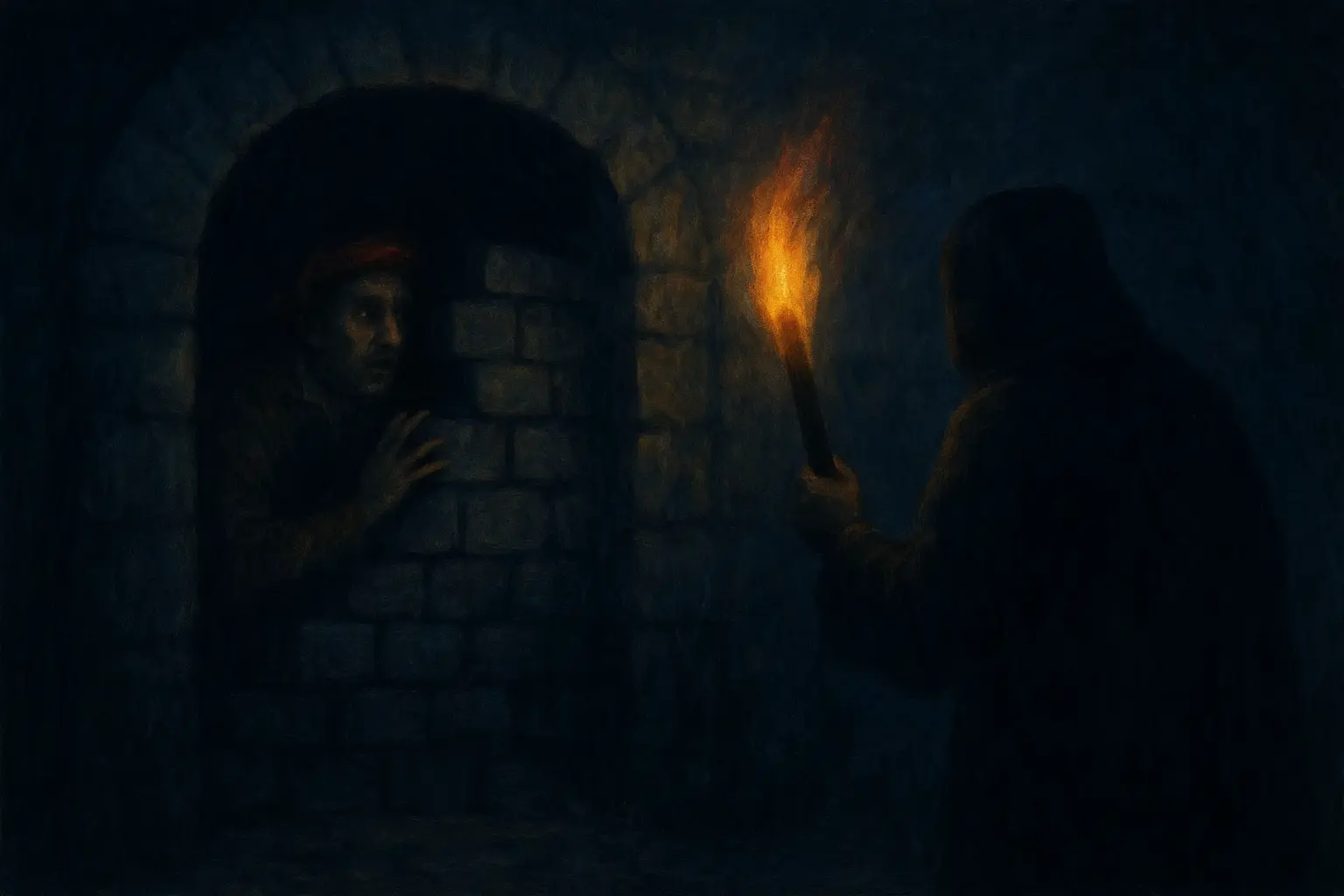
“The Cask of Amontillado” is one of Edgar Allan Poe’s most perfectly crafted revenge stories, and honestly? It’s terrifying precisely because there’s nothing supernatural about it. Published in 1846, this short story follows Montresor as he lures his enemy Fortunato into the catacombs during carnival and walls him up alive. What gets under your skin isn’t blood or ghosts but how calm Montresor stays throughout. He’s telling us this story fifty years later, and he still doesn’t feel bad about it.
Here’s what makes it brilliant: Poe never actually tells us what Fortunato did. We don’t know if Montresor had a legitimate reason or if he’s just crazy. The whole thing is a confession, but there’s zero remorse, just this weird pride in pulling off the perfect murder. It’s unsettling in a way that sticks with you. If you’re reading it for a lit class or you just enjoy dark tales, you’ll find “The Cask of Amontillado” is basically a masterclass in how to create dread without spelling everything out.
Table of Contents:
Full Story Text
Due to the length of this story, we’ve placed the full text on a separate page of our site. This keeps the article readable while still giving you access to the complete work.
You can view the full story here: The Cask of Amontillado by Edgar Allan Poe
Summary and Meaning
So Montresor starts by telling us Fortunato insulted him, and he’s decided to get revenge. But not just any revenge. He’s got rules: it needs to be executed perfectly, and Fortunato has to understand who’s doing it and why. Montresor’s been planning this for a while, just waiting for his shot.
That shot comes during carnival, when everyone’s drinking and partying. Fortunato’s already drunk and dressed like a jester (bells and everything). Montresor tells him he’s gotten this pipe of rare Amontillado sherry and needs an expert to verify it’s real. Now, Fortunato thinks he’s THE wine expert, so even though he’s got a nasty cough, he insists on checking out this Amontillado. Montresor keeps suggesting they turn back because of the cold, which of course just makes Fortunato more determined.
They head down into these catacombs under Montresor’s house. Picture walls lined with human bones, getting damper and grosser the deeper they go. Montresor keeps giving Fortunato more wine, getting him progressively drunker. Finally they reach this little alcove in the wall. Montresor says the Amontillado’s in there. Fortunato steps inside to look, and bam, Montresor chains him to the wall.
At first Fortunato thinks it’s a joke. But then Montresor starts building a wall with stones and mortar, sealing Fortunato inside this tiny space. You can feel Fortunato’s mood shift from confused to angry to absolutely desperate. He tries laughing it off. He begs. Montresor just keeps working. When the last stone goes in, Fortunato’s gone quiet except for the jingling of those jester bells.
The story wraps up with Montresor revealing this happened fifty years ago and nobody’s ever found the body. He ends with “In pace requiescat” (rest in peace in Latin), but there’s nothing peaceful about any of this.
What’s it really about though? It’s examining how revenge and pride destroy people. Montresor got what he wanted, but fifty years later he’s still obsessing over it, still explaining himself. Did revenge actually fix anything for him? Probably not, since he can’t stop thinking about it decades later. There’s also stuff about deception, how carnival masks reality, and the big question: does any insult actually justify walling someone up alive?
Themes and Analysis
Revenge and Its Consequences
Montresor is completely fixated on perfect revenge. Fortunato needs to know exactly who’s killing him and why, plus Montresor has to get away with it. Check and check. But here’s the thing: fifty years later, he’s still talking about it, still justifying it. That doesn’t sound like someone who found peace through revenge. It’s more like the murder’s been eating at him for half a century, even if he won’t admit it. Poe’s showing us that revenge might feel necessary in the moment, but it poisons you long-term.
Pride and Manipulation
The way Montresor plays Fortunato is actually fascinating. He mentions this other wine expert, Luchesi, knowing it’ll make Fortunato want to prove he’s better. Then he uses reverse psychology, saying they should turn back, which makes Fortunato dig in his heels. Fortunato’s pride in his wine knowledge literally walks him into his own tomb. It’s a reminder that pride makes us vulnerable, and someone who really understands people can exploit that weakness pretty easily.
Deception and Irony
This story is dripping with irony. Start with the name: Fortunato means “fortunate” or “lucky.” Yeah, not so much. He’s dressed as a fool, which is exactly how Montresor sees him. The whole carnival vibe means everyone’s wearing masks and pretending to be something they’re not, which fits perfectly with what Montresor’s doing. Even Montresor’s family motto, “Nemo me impune lacessit” (nobody attacks me without punishment), tells you everything about what’s coming. His coat of arms shows a foot crushing a snake that’s biting the heel. That’s literally the story: Fortunato bit, Montresor crushed him.
Guilt and Confession
The framing is weird when you think about it. Montresor’s telling this to someone he calls “You, who so well know the nature of my soul.” Who is that? A priest? God? Is he on his deathbed finally confessing? And is this even a real confession or is he bragging? He doesn’t sound sorry at all. But the fact that he feels compelled to tell this story half a century later suggests it’s haunted him, even if he’s in total denial about it. That “rest in peace” at the end could mean Fortunato, himself, or both.
Mortality and Memento Mori
The catacombs are full of bones and death imagery. Fortunato’s literally walking past thousands of dead people to reach his own death, but he’s too drunk and arrogant to catch on. The nitre growing on the walls is basically visible decay. Montresor’s family built their home on top of all these bones, which feels appropriate for someone whose solution to problems is murder. The whole story reminds you that we’re all heading toward death, some of us just don’t see it coming until it’s too late.
Structure and Form
This story is super tight, maybe 2,000 words total, but Poe packs in atmosphere, psychology, and horror without any fat on it. Every detail matters. Nothing’s there just to fill space.
We get first-person narration from Montresor, told fifty years after everything happened. This creates some interesting layers. One, we’re only hearing his side, which means we should probably question everything. Was Fortunato’s insult really that bad, or is Montresor nuts? Two, he’s had five decades to polish this story and make himself look good. It’s a pretty unreliable source.
The structure follows their descent into the catacombs, which mirrors Fortunato’s descent toward death. Pretty straightforward symbolism, but it works. As they go deeper, things get more oppressive, more obviously dangerous (to us, anyway, not to drunk Fortunato). Each section of the catacombs acts like a story beat.
The dramatic irony here is chef’s kiss. We know Montresor’s planning murder. Fortunato doesn’t. So when he jokes about not dying from a cough, or dismisses all the death imagery around him, or says Montresor isn’t a real mason (right before Montresor literally becomes a mason and builds a wall), it’s both darkly funny and deeply disturbing.
The dialogue does so much heavy lifting too. Montresor’s fake concern and Fortunato’s oblivious responses create this tension where they’re having two completely different conversations. One’s planning murder, the other’s thinking about wine. It’s brilliant and horrifying.
Historical and Literary Context
Poe published this in November 1846 in Godey’s Lady’s Book. This was a rough time for him personally. His wife Virginia was dying from tuberculosis (she’d be gone by January 1847), and Poe was dealing with poverty, drinking problems, and beef with other writers.
Speaking of beef, some scholars think this story might be Poe working out his feelings about critics who’d attacked him. He had serious ongoing feuds, especially with Thomas Dunn English, who publicly insulted him. The story could be Poe’s fantasy revenge, though obviously he used fiction instead of actual murder. That family motto about nobody attacking with impunity? That might be how Poe felt about literary attacks.
Poe set it in Italy during carnival, probably 1700s or early 1800s based on context. American readers associated Italy with Gothic stuff: ancient buildings, catacombs, aristocratic families with secrets. Carnival was perfect for a revenge plot because it’s when normal rules get suspended, people wear masks, everyone’s drinking. Much easier to lure someone to their death.
The story fits into revenge tragedy going back to Shakespeare and Greek drama, but Poe twists it. Usually the avenger dies or gets punished at the end. Montresor? He completely gets away with it, at least in worldly terms. No justice, no clear moral, just a successful murder.
It also taps into Victorian-era fears about being buried alive. This was a real anxiety before modern medicine could reliably confirm death. Poe explored it in several stories, but this is the only one where it’s deliberate murder instead of a terrible accident.
Significance and Impact
People study this as one of the near-perfect short stories in English. It does exactly what it sets out to do with zero waste. Every word counts. For anyone learning to write, it’s basically required reading for understanding economy, irony, and atmosphere.
You can see its influence everywhere in modern revenge stories. Any time someone elaborately tricks an enemy into their own destruction, that’s Poe’s DNA right there. The calm, calculating villain who explains their revenge? That archetype runs from Hannibal Lecter to Bond villains to countless others.
It stays relevant because those central questions never get old: When is revenge okay? Does it actually make you feel better? Can you trust someone who admits to murder but insists they were justified? These aren’t 19th-century concerns. They’re human concerns.
Psychologically, it’s fascinating because of what it reveals about obsession. Montresor’s spent fifty years thinking about this one murder. He’s the one who’s actually imprisoned, not by walls but by his need to keep justifying himself. The story becomes this study in how revenge can eat up your whole life.
Famous Lines and Quotes
“The thousand injuries of Fortunato I had borne as I best could, but when he ventured upon insult, I vowed revenge.” Right from the jump, we know Montresor’s mindset. But notice he never tells us what these injuries or the insult actually were? That vagueness hangs over the whole story.
“I must not only punish, but punish with impunity. A wrong is unredressed when retribution overtakes its redresser.” This is Montresor laying out his revenge philosophy. The fact that he’s thought it through this carefully makes him scarier than if he’d just acted on impulse.
“Nemo me impune lacessit.” The family motto meaning “No one attacks me without punishment.” It explains everything about why Montresor thinks this is justified. It’s about family honor, not just personal beef.
“For the love of God, Montresor!” Fortunato’s desperate last plea falls on deaf ears as Montresor just keeps building that wall. It’s one of those moments in literature that genuinely makes your stomach drop.
“In pace requiescat!” The final “rest in peace” is so ambiguous. Is he actually wishing peace for Fortunato? Being sarcastic? The uncertainty makes it more unsettling.
Conclusion
“The Cask of Amontillado” works because it’s a revenge story that refuses to celebrate revenge. Montresor gets what he wants. He commits the perfect murder. But Poe hints that “perfect” revenge might be an oxymoron. Why else would Montresor still be explaining himself fifty years later? Why this need to justify, to relive, to tell the story one more time?
The scariest part isn’t the murder itself. It’s Montresor’s complete lack of remorse. He shows no guilt, no second-guessing, no sense that maybe walling someone up alive is, you know, wrong. That absence of normal human feeling is more frightening than any monster. It reminds you that real evil often doesn’t look like evil to itself. It looks like justice, like necessity, like something that simply had to be done.
We never find out what Fortunato actually did, which is brilliant because it forces us to confront an uncomfortable question: would any insult actually justify this? Montresor thinks so. Poe leaves it to us to decide if we agree. Most of us probably don’t, which means we’re reading a story narrated by someone whose morality is completely alien to ours. That’s unsettling in the best possible way.
Frequently Asked Questions
What did Fortunato do to Montresor?
We literally never find out. Montresor mentions “a thousand injuries” and some vague “insult,” but gives zero specifics. This isn’t an oversight. Poe’s making us question whether Fortunato actually did something awful or if Montresor’s just insane. The fact that Montresor won’t tell us what happened is suspicious, right? If Fortunato really did something that justified being murdered, why keep it secret? The vagueness suggests even Montresor knows his revenge was way over the line.
What is Amontillado?
It’s a type of Spanish sherry wine, dry and nutty, from the Montilla-Moriles region. Back in the 1800s, it was pretty valuable stuff. A whole cask (called a “pipe”) would hold about 126 gallons and cost serious money. Montresor knows Fortunato’s really proud of his wine expertise, so claiming to have rare Amontillado is the perfect bait. Fortunato can’t resist the chance to show off his knowledge.
How does Montresor kill Fortunato?
He doesn’t directly kill him, which somehow makes it worse. He chains Fortunato to a wall in this little alcove in the catacombs, then builds a stone wall to seal him in. Fortunato dies from dehydration, starvation, or running out of air. The cruelty is that Fortunato’s conscious for most of it, fully aware of what’s happening, with plenty of time to experience pure terror. Plus it’s a method that doesn’t leave obvious evidence.
When does The Cask of Amontillado take place?
It’s set during carnival season in some Italian city, probably 1700s or early 1800s based on clues. Carnival matters because it’s all masks, drinking, and suspended social rules. Much easier to lure someone into catacombs without raising suspicion. But remember, Montresor’s telling this story fifty years after it happened, so the actual narration is much later.
Who is Montresor confessing to?
Great question with no clear answer. He addresses someone as “you, who so well know the nature of my soul,” but Poe never says who. Could be a priest hearing a deathbed confession. Could be a close friend. Could be God. Some people think he’s confessing to no one, that it’s just internal monologue showing his obsessive need to justify himself even to himself.
What does the coat of arms symbolize?
Montresor describes it as a golden foot on a blue field, crushing a snake that’s biting the heel. That’s literally what happens in the story. Fortunato (the snake) bit Montresor with an insult, so Montresor crushed him. The motto reinforces it: nobody attacks without punishment. But notice the image shows both sides getting hurt? The snake bites even while being crushed. Maybe that’s Poe hinting that revenge wounds everyone involved.
Is Montresor a reliable narrator?
Almost definitely not. He admits to premeditated murder, shows zero remorse, and gives no real evidence of what Fortunato supposedly did. He’s had fifty years to shape this story to make himself look justified. His claim about “a thousand injuries” sounds like paranoid exaggeration. Most readers figure Montresor’s either genuinely insane or he’s a cold-blooded killer trying really hard to convince himself (and us) that he had good reasons. Either way, you probably shouldn’t take his word for things.
Explore More Poe
If you enjoyed our analysis, keep exploring Poe’s universe with the following articles:
The Tell-Tale Heart by Edgar Allan Poe: Analysis and Interpretation
The Black Cat by Edgar Allan Poe: Analysis and Interpretation
A Dream Within a Dream by Edgar Allan Poe: Analysis and Interpretation