
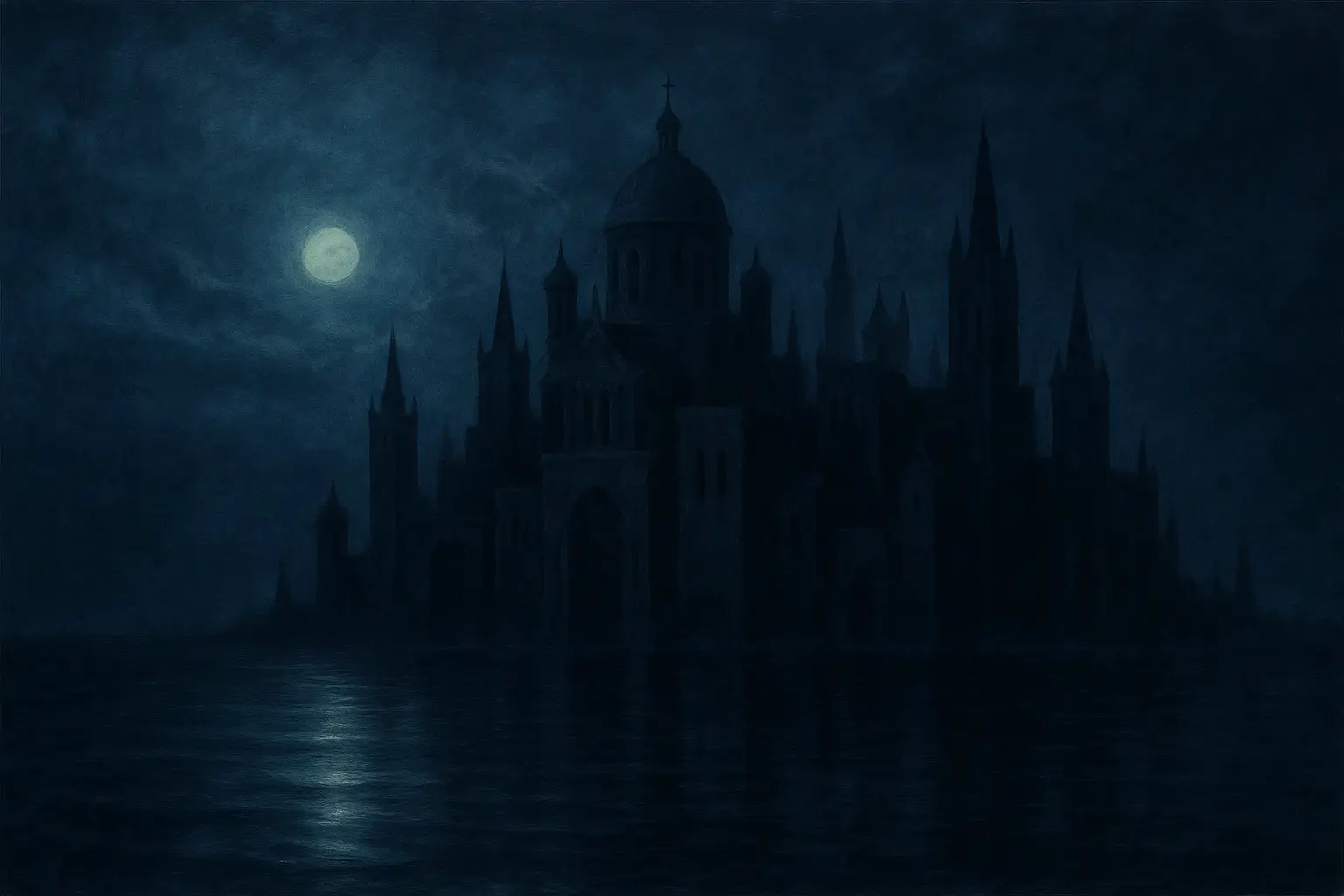
“The City in the Sea” is one of Poe’s weirdest and most atmospheric poems, and honestly, it feels like a fever dream. First published in 1831 and revised multiple times (final version in 1845), this poem describes a strange, dead city sitting at the bottom of the ocean. There are towers, domes, and shrines, but no people—or at least no living ones. Everything’s still, silent, and soaked in this eerie red light. Then at the end, the whole city suddenly sinks deeper into hell. It’s bizarre and haunting.
What makes this poem stick with you is the atmosphere Poe creates. He’s not telling a story exactly. He’s painting this nightmarish vision of a place where death rules, where nothing moves or changes until everything suddenly collapses. The city represents death, decay, and damnation—basically Poe’s favorite themes cranked up to maximum Gothic weirdness. If you’re analyzing this for class or just enjoy really strange poetry, “The City in the Sea” shows Poe at his most visionary and darkest, creating a world that feels both ancient and apocalyptic.
Table of Contents:
Full Poem Text
Due to the length of this poem, we’ve placed the full text on a separate page of our site. This keeps the article readable while still giving you access to the complete work.
You can view the full poem here: The City in the Sea by Edgar Allan Poe
Summary and Meaning
The poem doesn’t have a plot so much as it builds up this vision of a dead city under the sea.
Opening stanzas describe the city itself. There’s Death sitting on his throne in this place. The city has towers, shrines, domes, all kinds of architecture, but it’s all still and lifeless. Nothing moves. Time seems frozen. The buildings look down into the water below them, and even the water is weird—it’s red and glowing faintly. No normal light reaches this place. Everything’s dimmed and strange.
Middle sections emphasize how dead and silent everything is. The air is “hideously serene.” Nothing stirs. The towers and temples just sit there, rotting slowly. Even the shadows are different here—they’re permanent, not moving with any sun. This city exists outside normal time and nature. It’s a place of absolute stillness and death.
The ending is where things get wild. The city, which has been sitting there forever, suddenly starts sinking. The sea opens up and swallows it deeper, pulling it down toward hell. There’s this moment where hell itself looks up and recognizes something familiar—death coming home, basically. The city that was already dead plunges into something even worse.
So what’s it all about? On the surface level, it’s a Gothic fantasy about a cursed underwater city. Deeper down, it’s about death, damnation, and the ultimate fate of evil or corruption. The city could represent human sin and pride—all those towers and shrines built by humans thinking they’re important, now sitting dead and forgotten underwater. The final sinking suggests even death itself has a death, even the damned face final judgment. It’s apocalyptic imagery, the end of everything, even the end.
Themes and Analysis
Death as a Kingdom
Death isn’t just an event here; it’s a place, a realm with architecture and a throne. Death personified sits ruling over this city like a king. This gives death weight and permanence. It’s not just the moment you die; it’s a whole world you enter, and it’s not pleasant. The city’s grandeur suggests death is powerful, but its decay suggests death is also hollow and meaningless. All those towers and shrines don’t mean anything. They’re just empty monuments to nothing.
Decay and Corruption
Everything in the city is rotting, crumbling, falling apart. The architecture’s still standing but it’s corrupted, wrong somehow. This fits Poe’s obsession with decay. Nothing stays perfect. Everything beautiful eventually rots. The city might have been grand once, but now it’s just slowly dissolving. That red glow isn’t warm or alive; it’s feverish, diseased. The whole place feels contaminated.
Isolation and Stillness
The most unsettling thing about the city is how still it is. Nothing moves. No wind, no waves really, no sound, no life. The phrase “hideously serene” captures it perfectly—calm in a way that’s deeply wrong. Isolation isn’t peaceful here; it’s tomb-like. The city exists completely separate from normal life and time. It’s trapped in its own dead stillness forever, or at least until it sinks at the end.
Damnation and Hell
That ending where the city sinks toward hell isn’t subtle. Poe’s dealing with damnation, the idea that some places or souls are so corrupted they’re destined for hell. The city doesn’t just sink into deeper water; it sinks “Down, down” into the actual underworld. Hell looks up and recognizes it—like calling to like. This is about ultimate judgment and the fate of the damned. The city was already a kind of hell, and now it’s going to actual Hell.
The Futility of Human Achievement
All those towers, shrines, temples—humans built those. They represent human ambition, human pride, human attempts at immortality through monuments. And where are they? Underwater, dead, forgotten, sinking toward hell. Poe’s saying human achievements are meaningless in the face of death and time. Everything you build will rot and sink. Nothing lasts.
Structure and Form
The poem’s got five stanzas of varying lengths. The irregularity fits the weird, dreamlike content. There’s no neat structure because this isn’t a neat vision. It’s chaotic and strange.
The rhyme scheme varies throughout but maintains some pattern—mostly alternating rhymes with couplets thrown in. The rhymes create a kind of hypnotic effect, pulling you deeper into the vision. But they’re not so regular that they feel comfortable. There’s always something slightly off.
The meter’s primarily iambic with lots of variation. Some lines are short and abrupt, others long and flowing. This variation creates an unsteady, unsettling rhythm. You can’t quite find your footing, which matches the content—this city where normal rules don’t apply.
Poe uses repetition strategically. Words like “death,” “down,” “dim,” and “shadow” appear multiple times, building atmosphere through accumulated effect. The repetition creates this sense of being trapped in the vision, circling the same images and ideas.
The structure moves from description to action. First four stanzas describe the city in its frozen state. Final stanza is movement—sudden, dramatic sinking. This creates impact. After all that stillness, the sudden motion is shocking. The city that seemed eternal turns out to be sinking toward destruction.
Historical and Literary Context
Poe first published this as “The Doomed City” in 1831 when he was just 22. He revised it heavily and republished it as “The City in the Sea” in 1845. The revisions show Poe refining his craft, tightening the language, intensifying the atmosphere. Comparing versions shows his development as a poet.
The poem reflects Romantic and Gothic literary traditions. Gothic literature loved ruins, decay, death, and supernatural dread. The underwater city hits all those notes. Romanticism emphasized imagination, emotion, and visions beyond normal reality. Poe takes those tendencies to their darkest extreme.
Some scholars think the city might reference actual places or legends. Could be inspired by stories of Atlantis or other lost cities. Could reflect biblical imagery of doomed cities like Sodom and Gomorrah. Poe probably drew on multiple sources, creating something that feels mythic and ancient without being tied to one specific reference.
The poem was written during a period when Poe was struggling financially and personally. His foster father had recently died after years of conflict. Poe was trying to establish himself as a writer. The dark, apocalyptic vision might reflect his own sense of things falling apart, dreams sinking, achievements meaning nothing.
The 1845 revision came during a more stable period when Poe was gaining recognition. But he kept the darkness, even intensified it. Shows that regardless of his circumstances, Poe’s artistic vision tended toward death, decay, and damnation.
Significance and Impact
“The City in the Sea” showcases Poe’s ability to create atmosphere through pure description. There’s barely any narrative here—just vision, imagery, mood. The poem proves you don’t need story or characters to create powerful poetry. Sometimes a vivid, unsettling image is enough.
The poem influenced later writers dealing with apocalyptic or otherworldly imagery. You can see echoes in H.P. Lovecraft’s drowned cities and cosmic horror, in decadent poetry’s obsession with decay, in Gothic and horror literature’s treatment of ruins and lost civilizations. Poe’s vision of a dead city under the sea became an archetype.
It’s an extreme example of Poe’s Gothic sensibility. Everything he loved as a writer is here: death, decay, darkness, damnation, weird beauty, things underwater, things rotting, things doomed. If you want to understand what Poe was about as an artist, this poem distills it.
The imagery is so vivid and strange that it sticks in memory. Once you’ve read about that red-lit city sitting dead under the water, you don’t forget it. That’s part of the poem’s power—it creates an image that haunts you.
Famous Lines and Quotes
The opening establishing Death as a king ruling this realm sets the tone immediately. Death isn’t abstract here; it’s concrete, powerful, seated on a throne.
The description of the architecture looking down into the water creates this vertiginous, unstable feeling. The city’s built on water, surrounded by water, eventually swallowed by water. Nothing’s solid or safe.
“Hideously serene” is maybe the poem’s best phrase. Two words that shouldn’t go together but perfectly capture the wrongness of the city’s stillness. Calm shouldn’t be hideous, but here it is.
The red light that replaces normal light creates the city’s signature weird atmosphere. Everything’s dimmed and reddish, feverish, wrong. No pure light reaches this place.
The ending’s repeated “Down, down” as the city sinks emphasizes the fall, the descent into hell. The repetition mimics the motion while creating urgency and dread.
Conclusion
“The City in the Sea” works because it commits fully to its weird, dark vision. Poe doesn’t explain the city or rationalize it. He just shows it to you in all its strange, dead glory, then has it sink toward hell. The lack of explanation makes it more unsettling. You’re left with questions: What was this city? Who built it? Why is it damned? Poe doesn’t care about answers. He cares about the vision, the atmosphere, the feeling.
What makes it powerful is how completely Poe imagines this impossible place. Every detail reinforces the death and strangeness—the red light, the still air, the frozen architecture, Death on his throne. It feels coherent and real even though it’s a nightmare. That’s craft. Poe builds a complete world in just a few stanzas.
The ending’s sudden motion after all that stillness lands hard. The city seemed eternal, unchanging, trapped in its dead state forever. Then suddenly it’s sinking, falling, rushing toward final damnation. That shock reminds you that nothing’s permanent, even death. Even the damned have a final reckoning. Even stone cities crumble. Everything falls eventually.
Frequently Asked Questions
What does the city represent?
Most readings see it as death itself, or damnation, or human sin and pride. The city could represent human achievements corrupted and doomed. All those temples and towers suggest civilization, but it’s all dead now, sinking toward hell. Some read it as Poe’s vision of what happens to evil or corruption—it might seem powerful and eternal, but it’s ultimately doomed. Others see it as the realm of death, the place souls go when they die. The ambiguity allows multiple interpretations.
Is the city real or symbolic?
Purely symbolic. There’s no literal dead city under the ocean. Poe’s creating a metaphorical vision. The city represents abstract ideas—death, damnation, decay, human futility. The underwater setting makes it otherworldly and impossible, which signals we’re in symbolic territory. Everything in the poem works on a symbolic level rather than a literal one.
What is the red light?
The red glow that illuminates the city replaces normal sunlight. Red suggests blood, fever, disease, hell, decay—all fitting the poem’s themes. It’s not natural light; it’s wrong, corrupted light. The red probably represents the corruption and damnation that pervades the city. Everything here is tainted, including the light itself. It creates that signature Poe atmosphere of wrongness and dread.
Why does the city sink at the end?
The sinking represents final judgment or ultimate destruction. The city was already dead and damned, but the ending takes it further—into actual Hell. This could represent how even death itself has an end, or how damnation has levels, or how nothing is permanent. The sudden sinking after all that stillness creates dramatic impact. It suggests that corruption and evil, no matter how powerful they seem, are ultimately doomed to fall.
Who lives in the city?
Nobody, really. Or at least nobody living. Death is there on his throne, but Death isn’t alive. There might be dead souls or damned spirits, but Poe doesn’t show us people. The absence of life is part of the point. This is a dead place, empty and hollow despite all its architecture. The buildings exist but serve no purpose. It’s a city without citizens, which makes it even more eerie and meaningless.
When did Poe write this poem?
First version was published in 1831 when Poe was 22. He revised it multiple times, with the final version appearing in 1845. He worked on it for 14 years, refining the imagery and language. The revisions show his development as a poet. The later version is tighter, darker, more atmospheric than the original. Poe clearly thought this vision was important enough to keep improving.
What inspired The City in the Sea?
Probably multiple things. Legends of lost underwater cities like Atlantis. Biblical stories of doomed cities like Sodom. Gothic literature’s obsession with ruins and decay. Poe’s personal darkness and fascination with death. The poem feels mythic and ancient because Poe drew on these deep cultural and literary sources. But he transformed them into something uniquely his own—weirder and darker than most of his influences.
Explore More Poe
If you enjoyed our analysis, keep exploring Poe’s universe with the following articles:
The Fall of the House of Usher by Edgar Allan Poe: Analysis and Interpretation
The Bells by Edgar Allan Poe: Analysis and Interpretation
A Dream Within a Dream by Edgar Allan Poe: Analysis and Interpretation